Guides
When should sponsor field graphics appear during a game?
Plan sports broadcast graphics package sponsor logos for dead-ball windows. Set clear take-and-clear cues, protect live play, and rehearse removal.
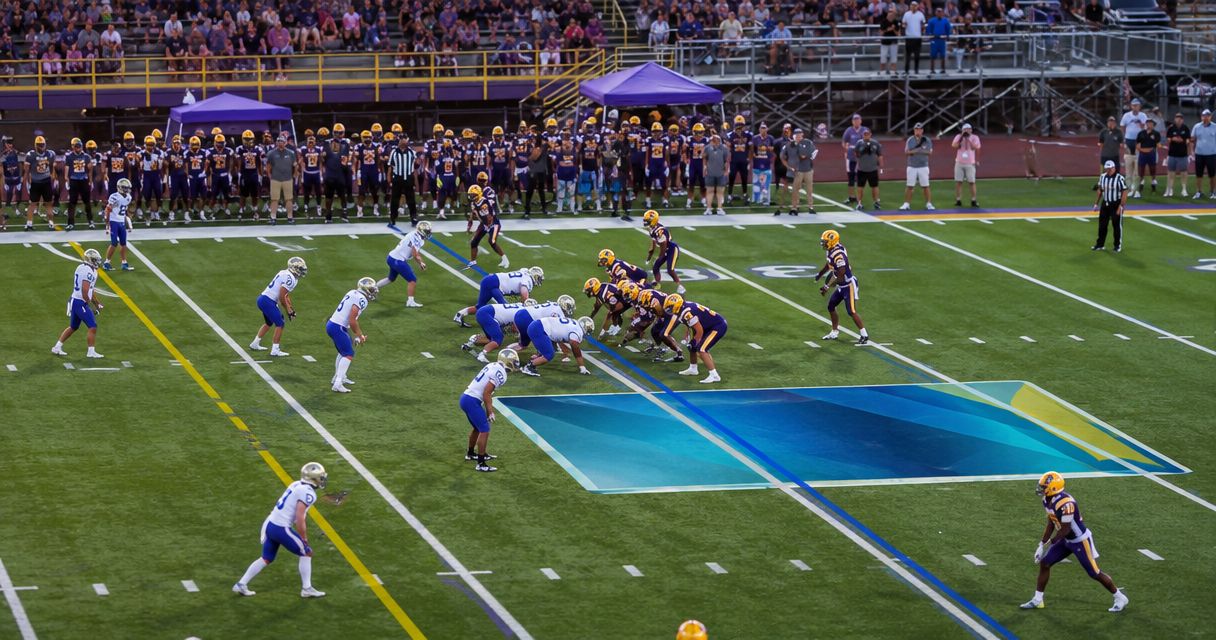
Sponsor field graphics should appear during confirmed stoppages, on a stable field view, and clear before the next snap or any shot change that makes placement unreliable. Treat the sponsor cue as permission to display—not a requirement to keep a logo visible when play resumes, the camera moves, or the picture becomes difficult to read.
TL;DR
- Schedule sports broadcast graphics package sponsor logos around stoppages, not an uninterrupted game-clock timer.
- PayneXR supports virtual football field lines and sponsor graphics on Windows; crews still need clear operating cues.
- Keep first-down lines and scrimmage lines readable; remove sponsor graphics when they compete with the play.
- Broadcast without on-field sponsor graphics whenever placement, camera movement, or operator workload makes the overlay unreliable.
When should sponsor field graphics appear during a game?
Use dead-ball windows as your default sponsor opportunity, then judge the actual picture before taking the graphic. A stopped game clock does not guarantee a suitable shot: the director might be showing an injured player, an official, a replay, or a close-up.
For your 2026 production plan, separate a planned opportunity from an approved on-air appearance. The opportunity belongs in the rundown—the ordered production plan—but the final cue depends on what viewers can see.
The practical details of putting sponsor logos on a live football field belong alongside this timing policy, not in a separate sales promise.
| Game situation | Add on-field sponsor graphics? | Benefit | Limitation | Best for |
|---|---|---|---|---|
| Confirmed timeout with a stable wide field view | Yes, after a production cue | Gives the logo a deliberate appearance | The director can still change shots | Planned sponsor placements |
| Between plays, with teams regrouping | Only while the picture remains suitable | Uses a natural pause | The next snap can arrive before the crew expects | Crews with a dedicated graphics operator |
| Active play | Leave sponsor graphics off under the default policy | Keeps attention on the ball and players | Provides no field-logo exposure during that play | Protecting game coverage |
| Replay or close-up | Keep the field overlay off unless that view has been specifically prepared | Avoids treating every shot as a field view | Requires another placement opportunity | Productions with changing camera views |
| Uncertain placement or overloaded crew | Broadcast without on-field graphics | Preserves a readable picture | Defers the sponsor appearance | Recovery and limited staffing |
Why this matters
A sponsor graphic shares the picture with information viewers need to follow football. The ball, player movement, first-down line, and scrimmage line should remain easy to identify.
Your sponsor schedule therefore needs an editorial rule, not just a list of logos. Decide when a logo is eligible to appear, who authorizes it, and what immediately ends the appearance. Those decisions also keep an operator from having to negotiate timing while a team approaches the line.
Use stoppages as opportunities, not automatic triggers
A timeout is a sensible place to plan an appearance because play has stopped. It is not permission to put a field logo over whatever shot happens to be on air.
Wait until the director settles on an appropriate field view. Check that the logo will sit in usable space and that no other graphic makes the picture crowded. Then take it on the agreed cue.
Between-play appearances need tighter coordination. A crew must recognize when the offense is preparing to restart and remove the sponsor graphic without waiting for the snap itself. If nobody can reliably own that removal cue, reserve field sponsorship for more controlled stoppages.
Do not use an injury stoppage as a routine advertising opportunity. Keep that moment focused on coverage, and place the sponsor elsewhere in the rundown. This is an editorial recommendation, not a claim about a league-wide advertising rule.
Broadcast without field logos when the picture needs priority
Broadcasting without on-field sponsor graphics is the right choice when the crew cannot confidently maintain the placement. The trade-off is straightforward: you give up that particular sponsor appearance, but you avoid displaying a graphic that distracts from the game.
A wide shot can stop being suitable during a pan, zoom, or camera change. Do not assume a placement approved on the previous frame remains appropriate throughout the sequence. Watch the actual output—the finished picture being sent to viewers.
Keep a clean feed available where your production routing permits it. A clean feed is video without the field overlays you need to remove. Plan a clean-feed fallback for football graphics before the broadcast rather than discovering the removal path during live action.
A clean picture is also the correct fallback when an operator loses track of the sponsor state. Remove the overlay, confirm the current shot, and wait for another approved opportunity. Do not troubleshoot a questionable placement while leaving it visible to viewers.
Give every appearance a take-and-clear sequence
Use the same short sequence throughout your 2026 broadcasts. A take cue means display the graphic; a clear cue means remove it. Keep those instructions distinct from selecting the next sponsor artwork.
- Confirm stoppage. The producer or designated operator confirms that play has stopped and that the moment is editorially suitable.
- Check picture. Inspect the current field view, the intended logo position, and the other graphics already visible. Check the outgoing picture, not only the artwork preview.
- Take sponsor. Display the approved logo after the agreed cue. The person responsible for removal keeps watching the game and the camera view.
- Clear graphic. Remove the sponsor before the restart, an unsuitable shot change, or any placement problem. Confirm that it has actually disappeared from the outgoing picture.
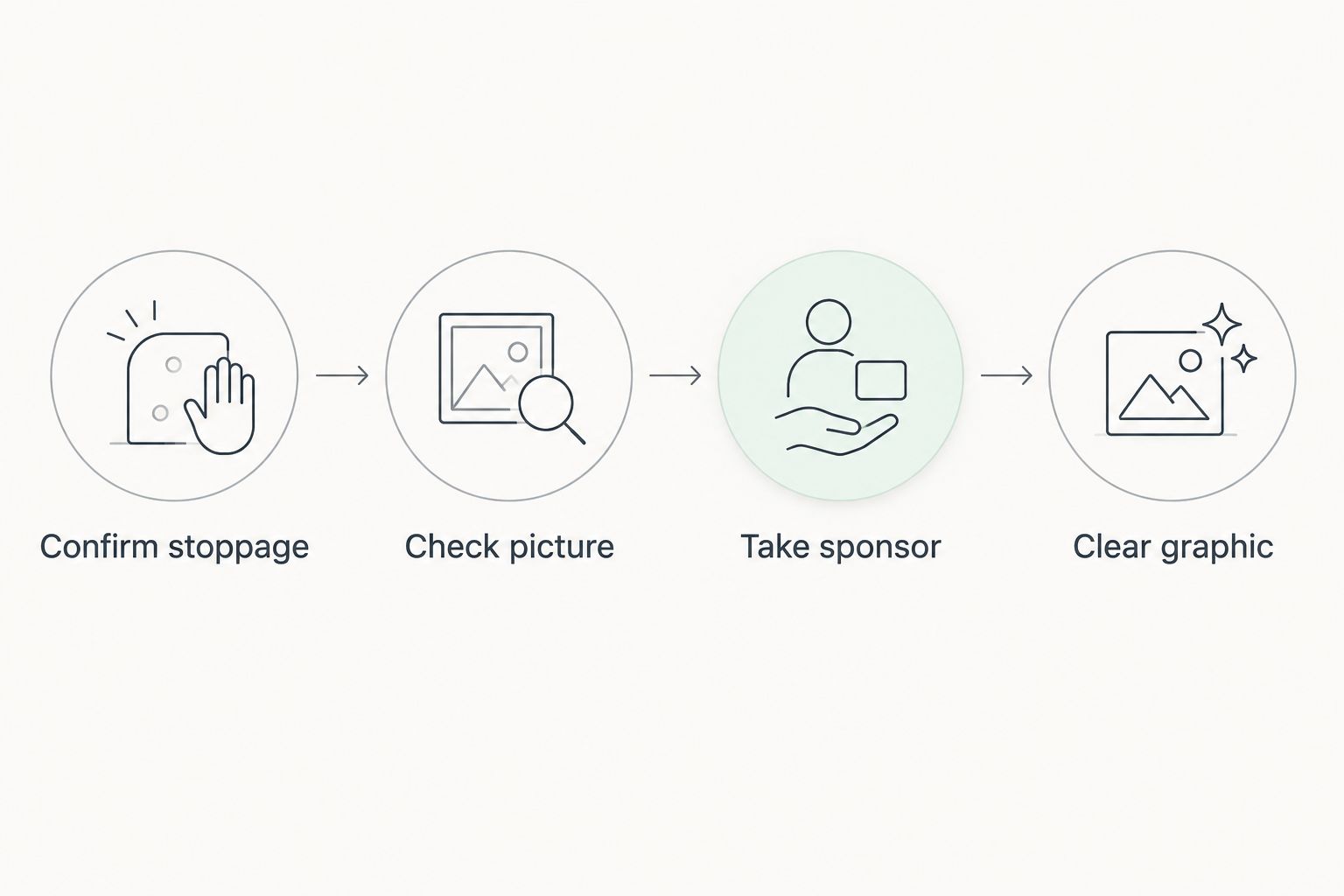
An appearance is not complete until the crew confirms the sponsor graphic has cleared.
Rehearse the sequence with a recording that includes short pauses as well as longer stoppages. Practice abandoning an appearance after the artwork is selected but before it goes on air. Selecting a sponsor should never commit the director to showing it.
Assign a backup removal responsibility, too. If the graphics operator is distracted, someone else needs an agreed way to request a clean picture. Verify the actual controls and routing in your setup rather than assuming a particular software function exists.
Why sponsor field graphic timing varies
The right cue depends on the production, not a universal display duration. Build the timing policy around these factors:
- Game pace. A brief regrouping offers less room for an appearance than a confirmed extended stoppage. Do not force a logo into a shrinking window.
- Camera behavior. A stable wide view and a changing close-up require different decisions. Clear a placement that no longer fits the shot.
- Operator workload. Someone handling switching, audio, and graphics cannot watch every task continuously. Reduce sponsor opportunities when duties compete.
- Existing overlays. Field lines, score information, and other graphics all occupy viewers' attention. Judge the complete picture before adding another element.
- Editorial context. An injury, disputed call, or developing explanation can make an otherwise available pause unsuitable for a sponsor appearance.
- Sponsor agreement. Translate the actual agreement into workable cues and a record of appearances. Do not assume it permits substitutions or guarantees a particular duration.
These factors explain why a fixed repeating timer is a poor substitute for a production decision. A timer does not know whether the director has changed shots or the offense is ready to restart.
Match the cue policy to your crew
School football broadcast teams
For a school crew, put sponsor responsibilities into the same rehearsal as camera switching and field-line placement. If students or volunteers rotate positions, make the take and clear instructions part of the handover.
Keep the initial policy narrow: approved stoppages, an identified field view, and a named removal operator. Expand the schedule only after the crew can execute those duties consistently. A more ambitious sponsor rundown is not an improvement if nobody can protect the restart.
Independent sports streaming crews
For an independent streaming crew, the main constraint is often the number of simultaneous duties assigned to each person. If the same operator manages the stream and graphics, choose sponsor windows that do not demand rapid switching between tasks.
Write the sponsor order before kickoff and keep the removal instruction visible beside it. When the production becomes busy, defer the next appearance instead of leaving the current logo on screen while handling another problem.
TV broadcasters
For a TV production, connect the field sponsor cue to the producer, director, and graphics operator's established communication process. Specify whether the sponsor graphic clears before a replay, a camera cut, or a return to active coverage.
A larger crew does not remove the need for ownership. Identify who calls the appearance and who confirms the clear, especially when responsibilities move between production positions.
Separate sponsor animation from field placement
Movement and placement solve different problems. A motion treatment can change how a sponsor enters or exits, but it does not establish whether that sponsor belongs on the current field view.
One way to assess why brands use motion graphics is to separate the communication goal from the live-production decision: attracting attention is not the same as choosing an appropriate moment to attract it. In football coverage, the latter decision belongs to the production crew.
If your workflow includes animated sponsor artwork, rehearse its entrance and exit against the restart cue. Do not let an animation dictate how long the director must hold a shot. A prepared appearance still needs to be cancellable when coverage changes.
Keep this distinction in the 2026 sponsor brief: artwork approval does not equal approval for every game situation. Review timing, placement, and any motion treatment as separate decisions.
Where does PayneXR fit in this workflow?
PayneXR football broadcast graphics suit Windows-based sports production teams that need virtual field lines and sponsor overlays. The software overlays virtual first-down lines, scrimmage lines, logos, and sponsor graphics onto live football video.
That capability addresses the display layer; your crew still needs to decide when the sponsor appears. PayneXR does not replace the editorial timing policy described here. Confirm the connections and controls for your actual Windows production setup, then rehearse the complete route from incoming video to outgoing picture.
The benefit is adding field information and sponsorship to live coverage. The operational cost is another layer the crew must monitor and remove when unsuitable. Choose broadcasting without those overlays whenever the production cannot manage that responsibility reliably.
Should sponsor logos stay visible during every play?
No—use stoppages as the default for field sponsor logos, rather than keeping them visible through every play. This policy gives the crew a clear removal point and keeps the active-play picture focused on football.
If a production proposes a different policy, test it against camera changes, player movement, field-line visibility, and operator workload. Do not approve continuous display solely because the logo looks acceptable on a still frame.
How long should a sponsor field graphic remain on screen?
Keep the graphic visible only while the approved opportunity remains suitable. There is no universal duration established here; the next snap, an unsuitable shot, or a placement problem should end the appearance.
For your 2026 rundown, record both the planned opportunity and the actual appearance. If a placement is missed, follow the sponsor agreement and production policy rather than extending the next logo into live action.
FAQ
What's the best time to show a sponsor logo on the football field?
A confirmed stoppage with a stable field view is the recommended default. Take the logo only after checking the picture, and clear it before play resumes or the shot becomes unsuitable.
Should sports broadcast graphics package sponsor logos appear automatically?
Sponsor logos should follow an approved production cue rather than a timer alone. Automatic timing cannot judge whether the current shot or editorial context is suitable.
Can a small streaming crew use field sponsor graphics?
A small streaming crew should use field sponsor graphics only when someone can own both the display and removal cues. Reserve appearances for controlled stoppages when other production duties compete.
Should a sponsor logo cover the first-down line?
Keep sponsor logos from obscuring the first-down line or scrimmage line. Change the placement or leave the sponsor overlay off when the combined picture is difficult to read.
What should happen if a sponsor graphic looks wrong on air?
Remove the sponsor graphic and restore a clean picture before troubleshooting. Wait for another approved opportunity after checking the placement and current camera view.
Does PayneXR provide football sponsor graphics?
PayneXR provides Windows broadcast graphics software that overlays logos and sponsor graphics onto live football video. It also supports virtual first-down lines and scrimmage lines; the production crew remains responsible for timing decisions.
What should a sponsor cue sheet include for 2026?
A 2026 sponsor cue sheet should identify the artwork, eligible game situations, take authority, clear authority, and appearance record. Include the instruction to abandon an appearance when coverage takes priority.
One last thing
Rehearse a cancelled sponsor appearance, not just a successful one. Select the artwork, prepare the placement, then have the director call for a different shot before it airs. The crew should be able to abandon the sponsor cue without interrupting coverage or leaving an unexpected overlay visible.